Tuesday, July 16, 2013

Blackberris vs. Raspberries


The older I get, the more confused about similar things sometimes. On the other hand, there are many similar things in nature that I have always had trouble distinguishing. On a recent walk around the grounds of the Nature Preserve, I found two of those similar things growing right next to each other. Blackberry and black raspberry are two different fruits. A person who is not that exposed to berries will surely have a hard time distinguishing one from the other; but you can never blame them because it is really hard to tell which is which by simply looking at the fruit itself. Bramble fruits are characterized by the clustering of smaller fruits (druplets) to become one bigger clump of fruit.


Blackberries are perennial plants which typically bear biennial stems ("canes") from the perennial root system. In its first year, a new stem, the primocane, grows vigorously arching or trailing along the ground and bearing large palmately compound leaves with five or seven leaflets; it does not produce any flowers. In its second year, the cane becomes a floricane and the stem does not grow longer, but the lateral buds break to produce flowering laterals (which have smaller leaves with three or five leaflets). First- and second-year shoots usually have numerous short-curved, very sharp prickles that are often erroneously called thorns. These prickles can tear through denim with ease and make the plant very difficult to navigate around. Unmanaged mature plants form a tangle of dense arching stems, the branches rooting from the node tip on many species when they reach the ground. Vigorous and growing rapidly in woods, scrub, hillsides, and hedgerows, blackberry shrubs tolerate poor soils, readily colonizing wasteland, ditches, and vacant lots. Blackberry leaves are food for certain caterpillars; some grazing mammals, especially deer, are also very fond of the leaves.


The flowers are produced in late spring and early summer on short racemes on the tips of the flowering laterals. Each flower is about 2–3 cm in diameter with five white or pale pink petals.
The drupelets only develop around ovules that are fertilized by the male gamete from a pollen grain. The most likely cause of undeveloped ovules is inadequate pollinator visits. Even a small change in conditions, such as a rainy day or a day too hot for bees to work after early morning, can reduce the number of bee visits to the flower, thus reducing the quality of the fruit. Incomplete drupelet development can also be a symptom of exhausted reserves in the plant's roots or infection with a virus such as Raspberry bushy dwarf virus.


The black raspberry has lots of tiny prickles on the stems, and larger leaves.  When you pick up the black raspberry from the plant, you will notice that it has become hollow. In other words, its stem (more appropriately termed as receptacle) was pulled out from the fruit and remained with the plant. This is not the case with blackberries because when you harvest them, you will almost always retain its stem.

Black raspberries become hollow in the middle when picked from the main plant whereas the blackberries retain its stem. Black raspberries are harvested at an earlier time while blackberries are more sensitive to cold temperatures. In terms of looks, blackberries are said to be smoother and shinier than black raspberries. Blackberries are native fruits in North and South America, as well as, in some parts of Asia and Europe whereas black raspberries are only indigenous in North America.
Black raspberries have less commercial value than blackberries.
 
Wild berries are tasty, but you will get scratched up - just count on it. And you are likely to get bit by chiggers and other bugs.  

Thursday, June 20, 2013

Hear the lovely song of the frog in yonder pond....


A great crowd of frog enthusiasts joined Bill Dean, aka Dr. Frog, at the frog pond last week, and not one person said "EWW!" as he netted up frogs, tadpoles and eggs from the bottom of the pond. I was proud of everyone! The pond is home to green frogs and bullfrogs at this time of year, although other species can be found earlier in the spring. Green frogs live wherever shallow freshwater ponds, road-side ditches, lakes, swamps, streams, and brooks are found. Most often seen resting along the shore, they leap into the water with a loud "eek" when approached.  Inhabiting the terrestrial and aquatic habitat boundary, green frogs employ a simple leap to leave behind their many and faster terrestrial enemies that cannot cross that boundary.


Dr. Frog noted that female green frogs have a white throat, while the males have yellow throats. Actually, they don't have much green color at all. Green frogs breed in semi-permanent or permanent fresh water.

Males call from and defend their territories. The distinctive call sounds like a plucked banjo string, usually given as a single note, but sometimes repeated, during the breeding season from April to August. They were quiet while we were all there, but by Wednesday afternoon, the chorus was in full voice, much to my surprise. Their territories can't be too big, given the number of frogs in close proximity.  See how many you can count in this short video.


Another way to tell the males from females is to look at the tympanum, or ear, next to their eyes. Mature females are typically larger than males, but the male tympanum is twice the diameter of the eye, whereas in females, the tympanum diameter is about the same as that of the eye. The dorsolateral ridges, prominent, seam-like skin folds that run down the sides of the back, distinguish the green frog from the bullfrog, which lacks them entirely.


Actual mating involves amplexus, whereby the male grasps the female with his forelimbs posterior to her forelimbs. The female releases her eggs and the male simultaneously releases sperm which swim to the egg mass. Fertilization takes place in the water. A single egg clutch may consist of 1000 to 7000 eggs, which may be attached to submerged vegetation. Yet few of the tadpoles reach maturity, since they are the favorite food of just about every other animal living in the pond.


Green frog tadpoles are olive green and iridescent creamy-white below, and eat mainly diatoms and algae. Adults eat insects, worms, and occasionally other small frogs and fish. Rather than chase their prey, they sit and eat whatever comes by. Metamorphosis (changing from the fully aquatic tadpole, to an air breather with legs) can occur within the same breeding season or tadpoles may overwinter to metamorphose the next summer. Males become sexually mature at one year, females may mature in either two or three years. Following metamorphosis, juvenile green frogs often travel from their natal ponds to neighboring ponds. Movements of up to three miles have been documented.


Like other frogs, green frogs have well developed senses. Their bulging eyes allow them to see in many directions. The round spot behind the eye, called the tympanum, or eardrum, is used for hearing. This specialized patch of tissue vibrates when sound waves hit it. The vibrations are then interpreted as sound by the frog's brain.
 
Yeah, no doubt about it. Frogs are cool!
 
Naturally yours,
~denapple

Friday, June 14, 2013

Buzzing Bees


You never know the questions that may arise from a simple walk in the woods. Last week, I visited the Morgan Conservation Park in Oldham County for the first time. Our target was the nightjars known to live there. Nightjars? The family to which Whip-Poor-Wills and Chuck-Wills-Widow belong - in other words, birds that sing at night. We found a redbud tree with the oddest thing - it looked like some bug with a hole puncher had taken bites out of the leaves. I've never seen this before, and sent it around to other nature friends.


Turns out that these holes were chewed by a leaf-cutter bee. What?  Yes, a native bee species. It's time to investigate bees a little more. I knew that sometimes it's hard to tell bees and flies and wasps apart, but I was astonished to learn about native bees! Some bees are "solitary," not living in hives with a queen like the honey bees do. Both males and females work for a living. This leafcutter digs a burrow in the ground, and uses the leaf pieces to separate each egg chamber from the next.


We are familiar with honey bees, and the problems they are having these days. But did you know they are not native to the New World? Honey bees arrived with European settlers about 400 years ago. Read this terrific brochure from the USDA about native bees. For example, there are over 4,000 different species of native bees in the United States! Many of our native bees are quite specialized, such as the blueberry bee or the squash bee.

Bees or Wasps?
Upper left: An eastern yellow jacket wasp
Lower left: The familiar black and yellow mud dauber wasp
Upper right: A digger bee,
Lower right: The nomad bee

 Bees are descended from wasps. Most wasps are carnivores; they either prey upon or parasitize other insects or spiders, and use this rich protein source to feed their young. About 125 million years ago, when the first flowering plants evolved, some wasps made a switch from hunting prey to gathering pollen for their brood. Perhaps they were hunting for insects that visited flowers and ate some of the pollen or drank the nectar along with their prey. It didn’t take much to find the advantages of consuming pollen over hunting. Pollen is rich in proteins and doesn’t fight back, so it is easy to imagine why the bees became vegetarians. Gathering pollen and nectar requires certain adaptations different from those of hunters, so they started to change, to evolve to meet these requirements and consequently became bees.


How to tell the difference between honey bees and bumble bees, the two most familiar bees?


Carpenter bees are a native species with a bad reputation. They have powerful jaws called mandibles with which they can excavate tunnels in wood. Fortunately they prefer soft wood and dislike paint or other finishing materials. It is possible to prevent them from doing serious damage to wood structures by taking simple precautions, such as painting or staining the wood. These gentle giants are called carpenter bees, and very likely you have seen some of them and their handiwork. There is usually a pile of sawdust below the opening of the hole during the early nesting and burrow excavation season. These bees create “particle board” spiral partitions between adjacent cells. Most bees construct spiral partition cell closures, a trademark of bees rather than wasps.

Green Metallic Bee - Agapostemon splendens
Some of the most beautiful bees belong to the sweat bee family. With their shiny metallic-colored bodies, these bees will capture your heart. Many are metallic green, but others have shades of color from blue to copper or gold, and sometimes even black. Most nest in the ground. Some are solitary while others share the entrance to their nests. In most cases, that is all they share and are not truly social. This little green guy was careful to wiggle all around the inside of this morning glory to get all the pollen.
Robber Fly with Bee Prey
Once while watching a little bee with big pollen sacks, we saw what appeared to be a large wasp attack and kill it.

Robber Fly

Further research found that this was in fact a robber fly. And you thought flies were only interested in garbage and manure! There are two simple ways to tell a fly mimic from a bee. First, look at the wings: bees have four wings, but flies have two wings. Second, look at the antennae: bees have elbowed antennae, while many flies have short, stubby, or hair-thin antennae. If you can't see the antennae, you're probably looking at a fly. A site called Beespotter has lots of great info on bees and bee look-alikes.

Tuesday, May 28, 2013

Saving Orphaned Animals and Birds


"There's a baby owl/possum/fawn/skunk in my yard. What should I do? Can you come and get it?"

Patty Bleau, our office coordinator at Creasey Mahan Nature Preserve, often receives calls like this during the spring. Since we used to host a raptor rehab organization on the property, it's not hard to figure out why people call us when they find a baby animal. That organization has been gone for many years, but Patty is always glad to give those callers the name and number of active rehabilitators in the area.


So, what should you do when you find a young animal? After all, we always want to save those cute little orphans. First, we must determine if the baby is actually an orphan or not. Brigette Williams runs Second Chances Wildlife Center in Oldham County, KY, specializing in mammals, and sums up all the factors in deciding whether the animal needs help or not. Around 50% of all animals rehabilitators receive are animals that did not need to be rescued. Many well-meaning people rescue an orphaned animal that does not need to be rescued. Animals make terrific mothers and their babies are always better kept with them versus humans.


DO NOT rescue wildlife and then KEEP (kidnap) the bird or animal for a possible pet. State and federal laws protect nearly all wild mammals and birds. It is against the law to possess the animal or bird or the nests, feathers, or eggs of a bird without special permits. High fines and possible jail time are often given. In addition, dietary needs of each species of animal are different and it is almost impossible to duplicate their needs in captivity without special training. Mother deer in particular, will hide their fawns in a safe place while they go to feed. Since fawns have NO ODOR, and their natural instinct is "freeze behavior" for the first two weeks of their lives, it is unlikely they will be found by dogs or coyotes (unless tripped over). Staying with her fawn would give away its hiding place. 


You are permitted to put an animal/bird in a box to keep it safe from cats and dogs while contacting a licensed rehabilitator. Keep the baby or injured animal WARM and CONTAINED and QUIET. Put tissues or towels in the box or bag to keep it warm, and cover it. Darkness makes the animal feel more secure. Loud noises are scary, so keep that in mind when selecting a spot for the box. Keep it out of drafts and away from air conditioners. The box can be placed half on and half off a heating pad set on low. If the animal gets too warm it can move to the other end of the box. A water bottle filled with warm water taped (to prevent rolling around) to the inside of the box will work just as well.


Birds on the ground are learning to fly. This is called fledging. Some bird species such as robins and blue jays remain on the ground for weeks. These birds look clumsy and injured. Unless you see a visible injury, please leave the fledglings to learn on their own. Mothers are often close by. Cats and dogs are the fledgling’s worry. Please keep your cat or dog indoors during this time. If you see a fledgling on the street, gently place it under a bush in a cat or dog free area. Birds that have fallen out of the nest can be placed back in. These birds will have little or no feathers. If the nest is destroyed, then make a nest from a Tupperware type bowl with paper towel inside and vent holes. Place the “nest” back in the tree. ALL ANIMALS will avoid coming to retrieve their babies if humans are around. Please watch for signs of mom without being too close or animals seeing you.

 
DO NOT FEED THE ANIMAL FOOD, WATER, OR MILK! Water and milk can go down into the animal’s lungs and kill it. Feeding an animal or bird the wrong food can cause severe diarrhea, dehydration, and even death. If an animal or bird has been caught by a cat or dog, please call Second Chances immediately. Even if wounds are not visible, the animal or bird needs to be given antibiotics. This young Turkey Vulture was "saved" by people who fed it hot dogs. It died of metabolic bone disease, after almost every bone in its body had broken. Raptors need to eat bones and fur, i.e., the whole mouse. How many of you keep mice and rats in the freezer? 


All animals "imprint" on their parents so they know how to behave like the animal they are. When their vision clears, the first big thing that feeds them in Mama. However, each species has a different period of time after birth when imprinting takes place. A human imprint animal has rough time if it is released. Raptors, for example, just can't figure out how to hunt for themselves, and when it's time to find a mate, they want a girl just like Mom, who was a human being. At Raptor Rehabilitation of Kentucky, Inc., birds in danger of imprinting are fed by volunteers wearing a camouflage suit, so the bird doesn't get imprinted.


OK, so who should I call when I find a baby that appears to need help? Here are some licensed local rehabbers and Animal Control. Please, please be patient, and leave a clear message with your name, address, phone number and the kind of animal that needs help. Most rehabbers specialize in birds or mammals. They all work with volunteers, and it may take a while for someone to contact you.

Second Chances Wildlife Rehab  (502) 228-6333
Oldham County Animal Control   (502) 222-7387
Raptor Rehab of Ky (502) 491-1939
Wingspan of Kentucky (502) 228-9034
 

Tuesday, May 21, 2013

Tulips Are TREES?


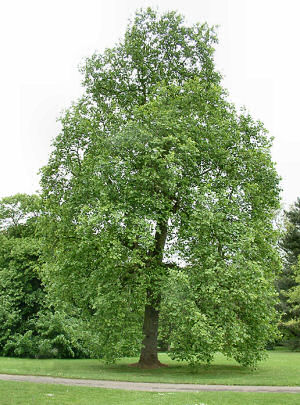
The tuliptree is one of the tallest eastern American hardwoods, and one of the tallest trees found in the nature preserve. It can often be identified from a distance because of its very straight, tapering, light-colored and evenly furrowed trunk which, on mature trees, is usually free of branches for a considerable distance from the ground. Common names include tuliptree, tulip poplar, yellow poplar, whitewood. Although it is commonly referred to as a tulip poplar, Liriodendron tulipifera is not closely related to the true poplars, nor is it related to the ornamental flowers we call tulips. It is a member of the Magnoliaceae family, along the many flowering trees of the genus Magnolia. The tulip tree is the state tree of Indiana, Kentucky and Tennessee.


Up close, it is even easier to recognize, with its distinctive leaf shape which would be hard to mistake for that of any other tree. The large, hairless, glossy, alternate, simple leaves of the tuliptree are four-pointed, with an indented summit that makes it look as if the tip has been cut off.


In mid- to late May or early June, after its leaves are developed, the tuliptree blooms, with prominent, colorful tulip-like flowers, from which the tree gets its fanciful name. The flowers have 6 yellowish-green and orange petals and three large sepals at their base. They produce a good amount of nectar and are pollinated by bees. The fruit, in the form of a narrow winged seed (samara) 1-2 inches long, is clustered in 2-3 inch cone-shaped structures which persist on the branches through the summer and into the fall. They are dispersed by wind.

 
I like the appearance of eyebrows or a moustache remaining in the bark where young branches have been grown over as the tree matures.   

The tuliptree is a particularly valuable tree for lumber because of its tall, straight trunk and wood that is soft, lightweight, straight-grained, resistant to splitting, and easily worked. Native Americans and early pioneers frequently hollowed out a single log to make a long dugout canoe, giving it the common name "canoe tree" in some regions. Sold commercially as "yellow poplar," it is used for furniture, musical instruments, interior finishes, shingles, boats, plywood, fuel, and various small objects. Tulip poplars are weather resistant, and termite resistantPioneers preferred these logs to other logs for homes.  In fact they were exported to Europe because they were recognized as a superior log. 
The root of the tuliptree can be used as a lemon-like flavoring agent in spruce beer. The bark contains 'tulipiferine,' which is said to have powerful effects on the heart and nervous system.

Tea made from the bark has historically been used to make an aromatic stimulant tonic, which is said to be beneficial in the treatment of rheumatism, chronic gastric and intestinal diseases, dysentery, coughs, and hysteria. Externally, the tea is used as a wash and a poultice on wounds and boils. The raw green bark can be chewed for its purported aphrodisiac effects, and the root bark and seeds have been used to expel worms from the body.

Wednesday, May 15, 2013

I Wish You Bluebirds in the Spring


This is such a busy time of year for our Bluebirds. Fortunately, Creasey Mahan Nature Preserve has over 20 nest boxes on the property which are favorite nesting sites for Bluebirds, Tree Swallows, Chickadees, Tufted Titmice, as well as House Sparrows and House Wrens. We don't mind sharing with the first birds on the list, but House Sparrows and House Wrens are bullies, and will kill other chicks in the nest, so any time we see them building in a Bluebird box, we pull that nest out. After 5 or 6 attempts, they will give up and go someplace else.
 

Bluebirds are wonderful parents. I think the same pair return to the same nest box year after year, although I admit, it is hard to tell them apart! In this photo, notice the male bringing a nice worm for the chicks, while the female removes a fecal sac. A fecal sac is a clean, tough mucous/gelatinous membrane/film containing the excrement of nestling birds. Yes, baby birds poop in diapers! Nestlings usually excrete one sac after each feeding, especially as they get older. The parent grasps the sac by the middle with their beak. They may take out 60-70 bundles a day! Usually both parents help with this task. For hatchlings and very young nestlings (e.g., up to 4-5 days old), the parents may eat the sacs, as the baby's digestive tracts are not very efficient and the sacs may still contain nutrition. Otherwise, they drop them outside of the box, usually some distance away to avoid leading predators back to the nest.


If you are interested in learning more about Bluebirds, Sialis.org is the source of all knowledge relating to them. The safe way to observe eggs and chicks is to use a mirror, for example. The nests have a deep cup, and it's hard to see the inside sometimes. The mirror ensures that you don't accidentally break an egg while exploring with a fingertip.


Not all cavity nesters are as tolerant as Bluebirds, who will wait patiently on a nearby branch while you visit their youngsters. Just be careful not to take too long. After all, those babies are growing fast and always hungry! Only 3 weeks after hatching, they will be ready to "fledge," or fly out of the nest. We see pictures of eagles and other birds flapping their wings in preparation for fledging. But cavity nesters don't have room for this. Remember, there may be 5-6 chicks crammed inside that box, but when it's time to fly, they jump out of the hole and never look back.


Both parents will feed the nestlings. What bluebirds eat depends in part on what is available. On average over the seasons, 68% of a Bluebirds' diet is made up of insects: grasshoppers, crickets, beetles, spiders, and caterpillars (usually spied from a perch and then caught on the ground.) They also eat ants, wasps and bees, flies, angleworms, snails, sow bugs, moths, weevils and termites. Bluebirds love mealworms, and you can put them out in a dish to attract nearby Bluebirds. Occasionally they catch insects in flight, especially when its warmer and flying insects are abundant. The proportion of insects in the food bluebirds collect during nesting season is probably significantly higher than 68%. That is because their growing young need lots of protein. The rest is mostly small fruit - e.g., flowering dogwood, holly, mulberry, wild grape, Virginia creeper, pokeweed, and Viburnum, gleaned from plants or foraged on the ground. In winter, I have watched them eating mistletoe berries and poison ivy berries, since Kentucky Bluebirds usually spend the winter here instead of migrating.

As the saying goes, "May all your blues be birds." Hope to see you at Bluebird Day, May 18, from 10 - 2.
Naturally yours,
~denapple

Monday, April 29, 2013

Trilliums in Spring

 
Large Flowered Trillium (grandiflora)
 If asked what my favorite spring wildflower is, I think I would have to say the trillium. According to Wildflowers of Tennessee the Ohio Valley and the Southern Appalachians, (hereafter called Tavia's field guide, since she is the co-author of it), there are about 30 trillium species found in the eastern U.S. Trillium species are divided into 2 major groups. Toadshades, also called sessile trilliums (or should it be trillii for the plural?) have a stalkless flower attached directly above a whorl of 3 mottled leaves. Wakerobins, also called pedicellate trilliums, have the flower on a stalk that rises from a whorl of 3 solid green leaves.
 
Large Flowered Trillium
Nothing is more beautiful than a hillside blanketed in these large showy flowers. You can always remember the name since everything on them comes in threes (tri for three); three leaves, three green sepals beneath three petals. They are mostly white, maroon or red, and yellow. The pink ones are usually the white grandiflora which as already been pollinated. We says that they blush after being pollinated.
Sweet White Trillium (simile)
Be sure to have the field guide along when you go looking for them, because it can be a trick to distinguish sometimes. Here are some things to look for when trying to tell them apart.
  1. What color is the center of the flower and the reproductive parts.
  2. Are the petals smooth or kind of wavy?
  3. Do the petals curve back over themselves (recurved)?
  4. Does the flower have a stem that raises it above the leaves? Does the stem bend over so the flowers hangs below the leaves?
Bent Trillium (flexipes)
Trillium is one of many plants whose seeds are spread by ants. At maturity, the base and core of the trillium ovary turns soft and spongy. Trillium seeds have a fleshy organ called an elaiosome that attracts ants. The ants extract the seeds from the decaying ovary and take them to their nest, where they eat the elaiosomes and put the seeds in their garbage, where they germinate in a rich growing medium.

Sessile Trillium (sessile)
Though trillium flowers are very attractive and inviting, they should never be picked, as the 3 leaves below the flower are the plant's only source of food, and the trillium is likely to die or take many years to recover. It is illegal to pick them in some jurisdictions and in all national parks. After germination, a trillium first produces only one leaf and requires another 6-7 years before it flowers for the first time!

Red Trillium (erectum)
Trilliums have some unusual common names. For example, this one (Trillium erectum) is also known as Stinking Benjamin or Stinking Willie, referring to the pungent odor of the flowers, which have been described as smelling like a wet dog. Other less commonly used names are American True-Love, Bumblebee Root, Indian Shamrock and Threeleaf Nightshade. Although I normally try to avoid Latin names (I can't pronounce most of them!) it is very useful to know the scientific names to keep these trillium straight in your mind since each one has so many different common names.

Yellow Trillium (luteum)
The Woodland Garden at Creasey Mahan Nature Preserve hosts a fine collection of trillium on the hillsides. Yellow trilliums have a lemony or sweet citrus aroma if you bend down to sniff it. They range in color from yellow to various shades of green or chartreuse. The sessile trillium commonly found in the woods along Little Huckleberry Creek has an aroma resembling raw beef or carrion, which help to attract flies and beetles which pollinate the plant.

Painted Trillium (undulatum)
While in the Smokey Mountain National Park last week I asked everyone where the painted trilliums were, since I'd never seen one before. The field guide notes that they are infrequent, and you better believe it!  The only one sighted were up the 2.2 mile Porter Trail. The rain continued, but slacked off a bit, so off we went. When we finally found them, about 15 flowers grew on a moss covered boulder, but they were only about 3-4 inches tall! Tavia assures me they are normally the size of all the others. These are the only species with bi-colored petals.


Remember that trilliums have 3 of everything? Well, there is an exception to every rule. This 9 leaved trillium can be found at Cherokee Park in Louisville. Have fun finding trilliums!

Naturally yours,
~denapple